Meiji Jingu Shrine 明治神宮

Ema at Meiji Jingu
Sujong chae from Pixabay

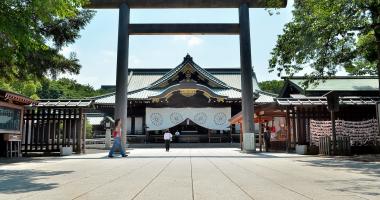
Meiji Jingu Shrine
Tim Foster on Unsplash

Sake barrels at Meiji Shrine
Charlie Larkman on Unsplash
Located in the heart of Tokyo in a wooded area of over 100,000 trees, Meiji-Jingu is one of Japan’s most famous shrines and is dedicated to Emperor Meiji and Empress Shoken.
Meiji Jingu Tokyo
Meiji Shrine is a large Shinto shrine in the Yoyogi district of Tokyo, a little south-west of the huge commercial district that is Shinjuku.
This beautiful, green retreat from the surrounding concrete jungle was built in 1920 to venerate the Emperor Meiji (1852-1912) under whose reign Japan became a modern state.
Next to huge Yoyogi Park, Meiji Jingu has an almost rural feel, and is one of the most visited Shinto sites in Japan. Meiji Jingu is a good place to stroll day or night.
Meiji Jingu Shrine is a short walk from Harajuku Station or Yoyogi Station on the Yamanote Line. The surrounding Yoyogi Park includes the site of the 1964 Olympics. Kenzo Tange's Yoyogi National Stadium, on the far side of Yoyogi Park from Meiji Jingu, was built for those Games and is still a Tokyo landmark.
Meiji Jingu Shrine History
The Meiji Shrine was completed in 1920 and has become Japan's most famous Shinto shrine. Meiji Jingu Shrine is dedicated to the souls of Emperor Meiji (1852-1912) and his wife, Empress Shoken (1849-1914). The 15-year-old Emperor Meiji ascended the throne in 1867 as Japan saw the violent end of over 260 years of Tokugawa rule and the Meiji Restoration (Meiji Isshin) ushered in a period of industrialization, urbanization and colonial expansion as Japan began to attempt to catch up with the major Western powers.
After their deaths in the early part of the 1900's, Meiji Jingu Shrine was built to venerate them. Meiji Jingu Shrine became a meeting point for Japanese right wing radicals leading up to World War II, in which it was destroyed by American bombing in 1945 and rebuilt through public donations in 1958.
Meiji Jingu Shrine Features
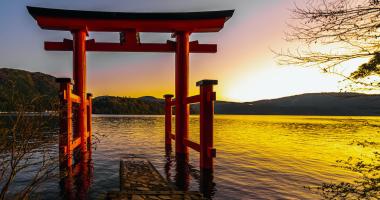
The two torii gates at the entrance to the shrine are 40 feet high. When you pass under, you are symbolically entering a sacred place and leaving behind the everyday. The long path to the shrine buildings is lined by large cedar trees.
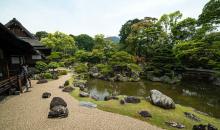
One of the most beautiful areas in Meiji Jingu Shrine is the Inner Garden (Jingu Nai-en or Gyoen), which in late June is filled with over 150 species of irises in full bloom in the Minami-ike Shobuda (Iris Garden). It is said the Emperor Meiji designed the Nai-en Garden himself for the pleasure of his wife. Further in is the Treasure House Annex, where the royal couple's clothes and personal things are kept.
The Treasure House to the north of the main shrine buildings exhibits portraits of previous Japanese emperors and the elaborate court kimono worn by the Meiji monarchs.
Other buildings of note in the shrine complex are a Kaguraden for sacred kagura dances and the various shrine gates: Minami Shinmon, Gehaiden and the huge Otorii gate built in 1975 from Japanese cypress from Mount Tandai in Taiwan. Next to the Treasure Museum is the Shiseikan Dojo (Martial Arts Training Hall).
The park that surrounds Meiji Jingu Shrine is a forest of some 120,000 trees of 365 different species. The trees were brought from all over Japan and now the forest is a haven for many species of birds. Winter sees a large number of Mandarin ducks gather at the North Pond in front of the Treasure Museum. You quickly forget you are in the world's largest city.
Souvenirs from Meiji-jingu
There are some original souvenirs available at Meiji Jingu, including short poems of 31 syllables written by the Emperor and Empress, called waka, as well as Kikanbun, letters to the Kami, and ema, wooden tablets with written wishes.
Meiji Jingu Shrine Festivals
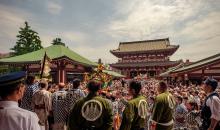
Meiji Jingu's spring festival is on the 2nd - 3rd May, and its fall festival in during the 1st - 3rd November. The more important of the two is the fall festival. As many as a million people jam the shrine and park on 3rd November, which is the Emperor Meiji's birthday, and the Culture Day national holiday. The shrine is similarly teeming with visitors on New Year's Day.
Other festivals held at Meiji Shrine include a sumo grand champion ring entering ceremony in January, a National Foundation Day Festival on the 11th February and a prayer ceremony for agricultural fertility also held in February.
Meiji Shrine is also a very popular place for wealthy Japanese to celebrate a traditional Shinto-style wedding. Wedding ceremonies are often held at Meiji Memorial Hall (Meiji Kinenkan) with a parade and blessing in the area outside the Main Hall. Meiji Kinenkan, near JR Shinanomachi Station on the JR Chuo-Sobu Line, was where the Meiji Constitution was drafted and is a beautiful building set in lovely grounds. An exclusive summer beer garden occupies the lawn terrace in summer with food set courses beginning from around 8,000 yen.
Near Meiji Jingu Shrine
Meiji Shrine is adjacent to the big Yoyogi Park that provides some of Tokyo's best people-watching. The cutting edge of Japanese street fashion is to be found in nearby Harajuku with its elegant Omotesando Avenue, and in the boutiques of Aoyama - all a short walk away. Shibuya and Shinjuku are a couple of stops on the Yamanote Line.
Address, timetable & access
Meiji Jingu Shrine
-
Address
1-1 Yoyogi Kamizonocho, Shibuya-ku
151-8557
Japan
-
Phone
+81 (0)3-3379-5511 -
Timetable
The shrine is open sunrise to sunset. The museum is typically 10 am-4.30 pm and is closed on Thursdays. -
Price
Free admission to shrine grounds; 500 yen to see the irises, 1000 yen to enter the Treasure House and Treasure Museum Annex (Bunkakan). -
Access
Meiji Shrine can be easily reached from Harajuku Station on the JR Yamanote Line, Meiji-jingu-mae Station on the Chiyoda Subway Line or Kita-sando Station on the Fukutoshin Line of the Tokyo metro. -
Website
https://www.meijijingu.or.jp/en/