Ryoanji Temple Kyoto 龍安寺

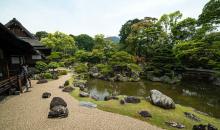
Zen garden at Ryoanji in Kyoto
Victor Lu on Unsplash
Ryoanji Temple located in the northwest of Kyoto is home to Japan's best known stone garden. Now a World Heritage Site this a must see attraction in Kyoto.
Ryoanji Temple
History of Ryoanji Temple
Ryoanji Temple in Kyoto houses the most famous Zen rock garden in Japan arranged in the kare-sansui (dry landscape) style. Founded in 1450 by Katsumoto Hosokawa, the temple grounds also include an interesting wooded garden and pond. There is an admission fee to enter the main stone garden.
The site of Ryoanji Temple was originally the family estate of the Fujiwara clan.
Ryoanji is famous above all for its karesansui (dry landscape) rock garden built in the Soami style. The garden at Ryoanji Temple is composed of raked gravel and fifteen moss-covered boulders of different sizes.
It is said that only 14 of these can be seen from any one place in the temple. Until one attains enlightenment, the fifteenth boulder remains unseen. The whole walled garden can in fact be seen as a koan or Zen riddle, hiding its meaning from view.
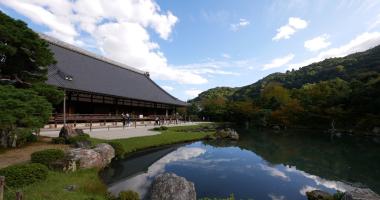
Less well known is the garden to the left of the entrance which dates from the 12th century and was originally the site of a villa of a noble of the Fujiwara clan. Almost southeast Asian in appearance, it is worth a stroll around the pond.
Viewing Ryoanji's
Stone Garden Ryoanji's garden is viewed from the wooden alcove of the head priest's former residence known as the Hojo, which also has decorated fusama sliding doors along its tatami floors and some other small interior gardens.
Things to see near Ryoanji
Temple Ryoanji is close to a number of other Kyoto temples in the area. These include Kinkakuji Temple (Golden Pavilion), Toji-in Temple and Ninnaji Temple all of which can be seen in half a day of temple viewing. The Insho Domoto Museum and Ritsumeikan's Peace Museum are also very close.
Address, timetable & access
Ryoanji Temple
-
Address
13 Ryoanji Goryonoshita-cho, Ukyo-ku
616-8001
Japan
-
Phone
+81 (0)75-463-2216 -
Timetable
Mar - Nov 8:00a.m.-5:00p.m.
Dec - Feb 8:30.am-4:30p.m.
-
Price
500 JPY Adult / 300 JPY Children -
Access
Take buses #12 and #59 from Keihan Sanjo Station or Ryoan-ji Station on the Keifuku Kitano Line from Kitano Hakubaicho station. Alternatively take the Kyoto subway north to Kitaoji Station and then bus #12. -
Website
http://www.ryoanji.jp/smph/eng/