Rice in Japan
Rice in Japan: read an article on present-day rice farmers and rice-growing techniques in Japan. The cultivation of rice has shaped the politics, geography, economy and culture of Japan.
21st Century Rice Farmers: Rice in Japan 米
Sian Thatcher
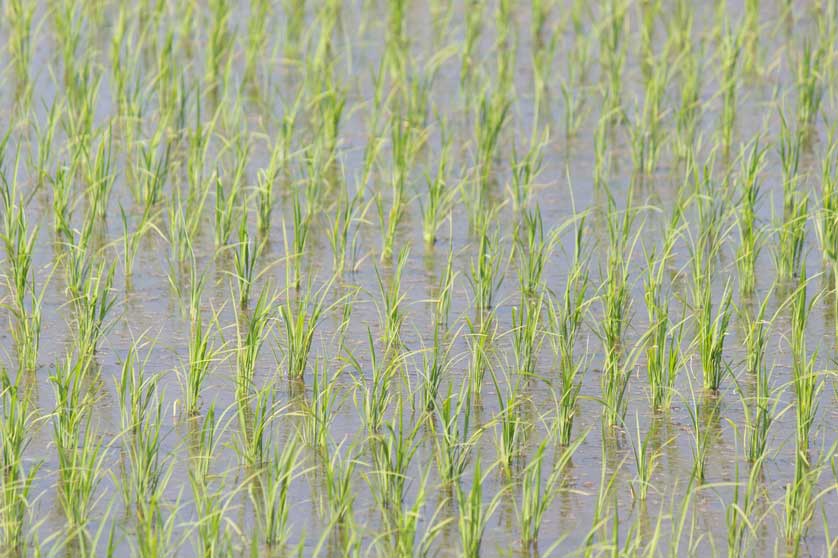
Young seedlings in a rice paddy in Japan
It sounds obvious to say, but rice is important to the Japanese.
While in Western countries rice is appreciated because it is an integral part of any Chinese or Indian takeaway, it is just another commodity, available in every supermarket.
In Japan, however, it's a different story.
The language holds a few clues. The early indigenous name for Japan was mizu ho no kuni (the land of the water stalk plant or rice).
The Japanese word gohan means "cooked rice", but also, rather tellingly, means "meal".
Hence, asagohan (朝ご飯) (breakfast), literally means "morning rice", hiru-gohan (lunch) is "afternoon rice", ban-gohan is "evening rice" and so on.
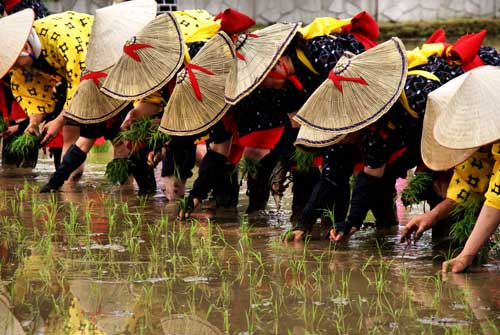 Rice is normally planted in May throughout Japan
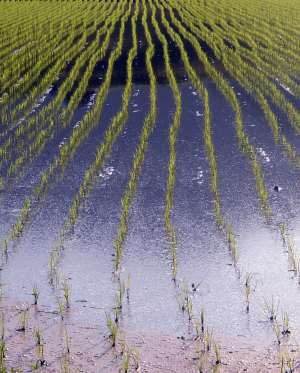 Rice growing, Shimonnohara, Shimane, Japan
History Of Rice In Japan
Brought over to Japan from Korea 2,300 years ago, rice has been farmed by the Japanese ever since. The cultivation of rice has shaped the politics, geography, economy and culture of the country.
Rice accounts for one quarter of the daily calorific intake per person in Japan. In the Shinto religion, sake and rice cakes are the most sacred of offerings. The Emperor of Japan, himself, is a rice farmer and has rice paddies on the grounds of the Imperial Palace. It is more than just a food.
One reason it is so important is because it is not imported, unlike much of Japan's meat, fish and fruit. Japan is self sufficient in rice and hence, it is a symbol of independence. However, times are changing.
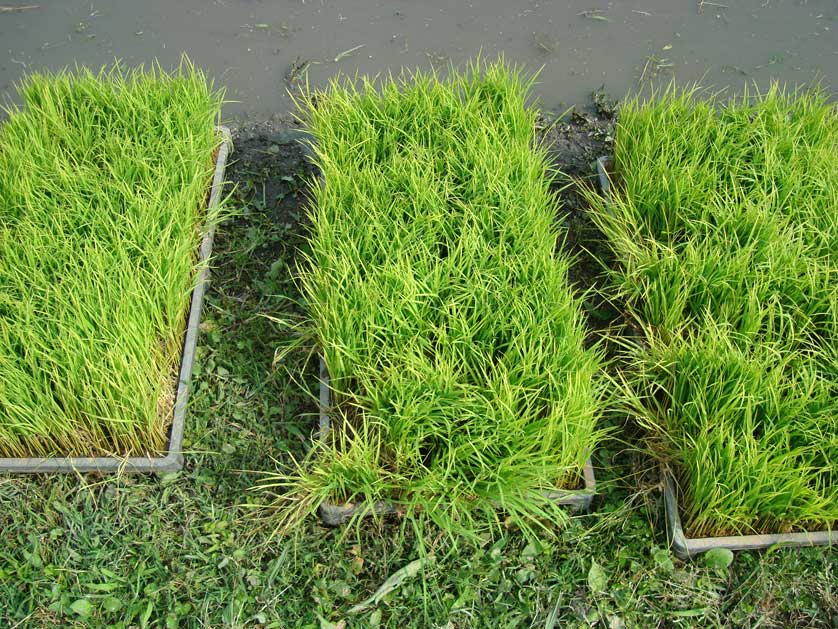 Young rice seedlings waiting to be transplanted by machine
 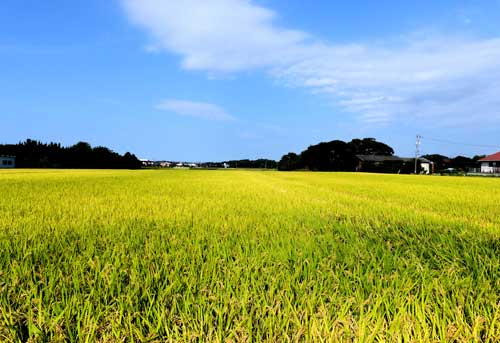 Rice ripening in September in Japan
Life As A Farmer In Japan
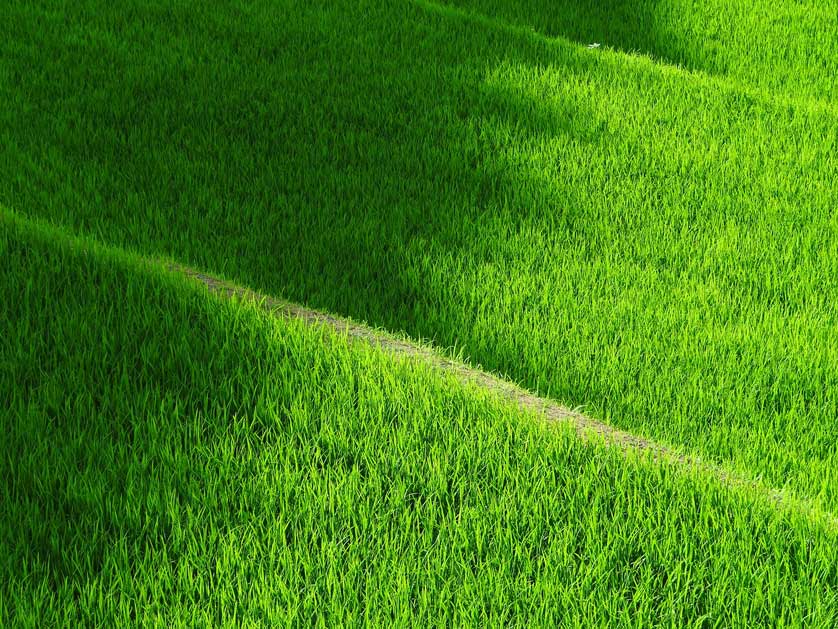 Rice field in Japan
Kazuaki Kawasaki describes life as a farmer in the 21st century. His family have been farming for generations and he inherited his land from his relatives.
"I grow rice, onions, sometimes grow soybeans," Kawasaki says. "I think rice is necessary for Japanese. I think farming is easy, but sometimes it is difficult. I farm the land almost completely by machine. I learned about farming from my parents."
What makes Kawasaki remarkable is the fact that he also has a full time job working for Mitsubishi Sumitomo as a line inspector. This is not uncommon. When the time for planting or harvesting comes around, many Japanese are busy in the fields as well as at the office.
"My hair salon is always quiet at this time of year," sighs stylist Hiromi Nakamura. "It is planting season, after all."
"I spend around five days every month farming," Kawasaki tells me, "But in harvest season, I farm after work every day. I have a second job because rice and onions sell at very low prices. They are cheap, and I can't enjoy the good life from farming alone."
The price of produce, especially rice and onions, has dropped considerably of late. The economy is changing, and it is not favouring the farmer.
"If I retire from my job, I want to be a full time farmer." Kawasaki says, knowing that he won't be able to do that for a while yet. That is, unless he hits the jackpot at pachinko (Japanese-style slot machines), of course.
Rice Is Less Popular Than Before
Noriko Mitsutake, teacher of Japanese to foreign students at the University of Saga, discusses the situation.
"Rice is less popular than it was before. People are eating and farming it less. Before everyone would eat rice for breakfast, but now many prefer bread. Also, other types of produce such as strawberries and aubergine are more popular than rice to farm."
She explains the predicament.
"The children who will inherit the rice fields don't want to grow rice. They don't want to be farmers. They want to go to the city as there is no money in farming. It's a problem. However, you can't buy farmland and build on it. The government wants to keep the land in the same proportions, i.e. they want to keep the amount of land used for farming the same."
Hence there are empty rice fields.
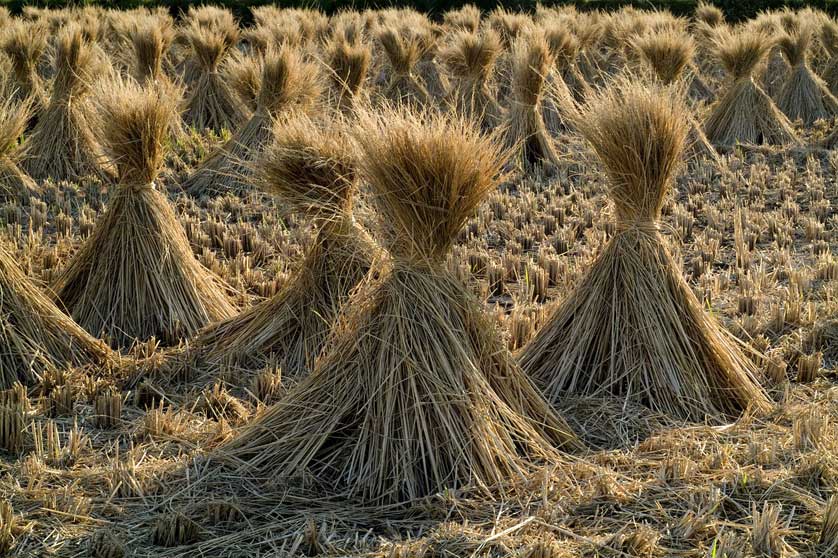 Harvested Rice
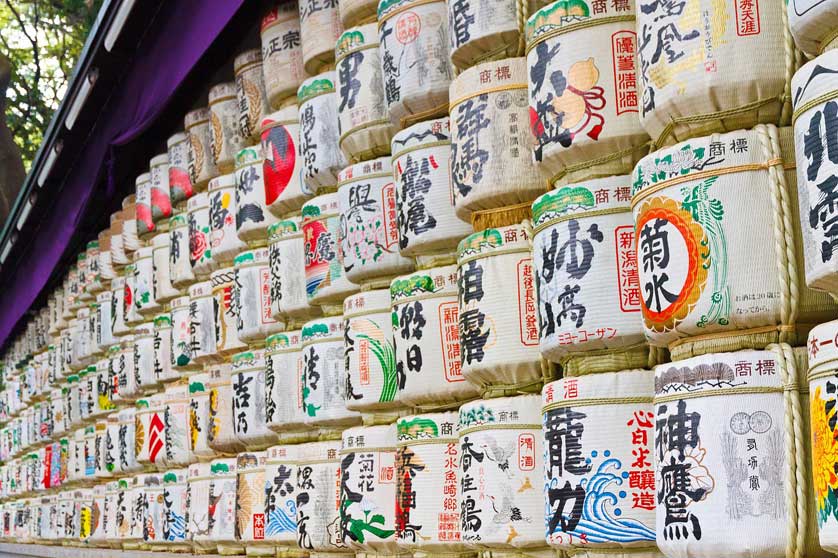 Sake Barrels in a Japanese Shrine
"The government pay farmers to work the land, to maintain the ecology. However, the amount of money they give is decreasing, so there is less incentive."
"Over the last 30 or 40 years farmers have started to take second jobs as the economy was changing and farming alone was not enough."
As rice is such a central part of the culture and it is being consumed and cultivated less, we do have to wonder what the future holds for Japan, and 21st century farmers like Kawasaki.
Other Japan Articles By Sian Thatcher
Sex Museums in Japan
Blood Types in Japan
Spring in Japan
Karaoke
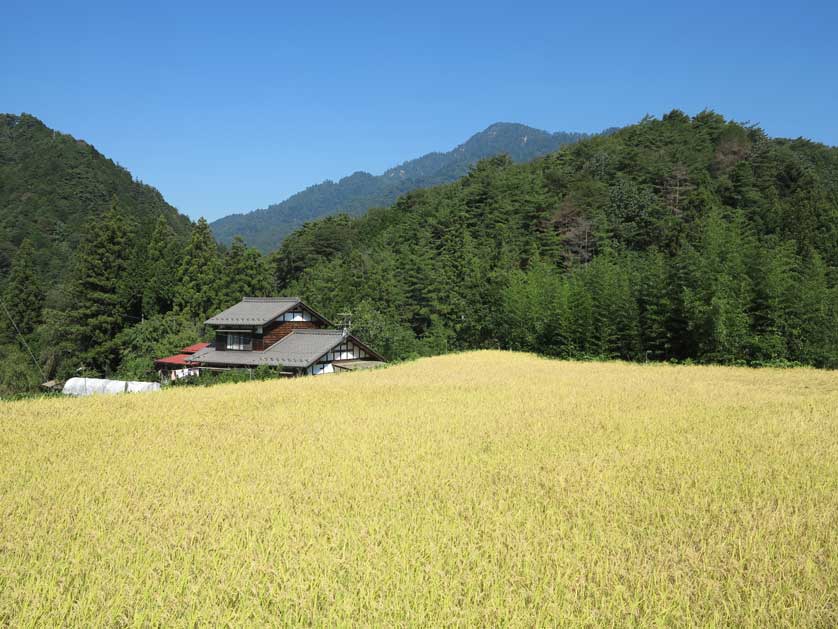 Mountain rice paddies in the Kiso Valley, Gifu Prefecture