Japanese Food Types
What To Eat in Japan: Varieties of Japanese Cuisine
- Bento
- Teishoku
- Donburi
- Izakaya
- Kaiseki
- Kaiten Sushi
- Kushikatsu
- Nabe
- Okonomiyaki
- Ramen
- Soba/Udon
- Sushi/Sashimi
- Tempura
- Unagi
- Yakiniku
- Yakitori
- Japanese Curry
- Japanese Food
Bento お弁当
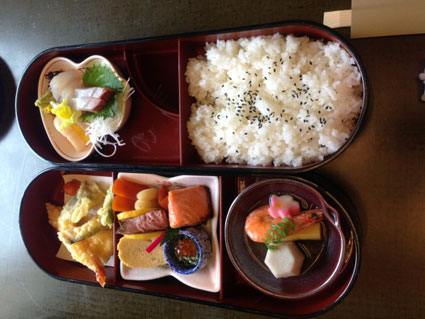
A Japanese o-bento boxed meal
A bento (or, more usually, the honorific o-bento) is a boxed meal for one person that typically contains a combination of rice, fish (and/or meat) and vegetables, including some pickled vegetables (tsukemono) such as umeboshi plums or slices of daikon radish. Although simple in concept, a bento can be very elaborate, with numerous o-kazu (as the various non-rice elements of the meal are known) and even decorative.
Bento boxes are usually made of some form of plastic, but top-end traditional-style bentos boast a lacquered wooden box. A bento can be in a single box, or can often include tiers, sometimes up to three or four. A bento is traditionally wrapped in a patterned furoshiki cloth.
The bento is an example of a revived Japanese tradition, as it had all but died out after World War Two but was brought back as a modern convenience with the rise of convenience stores and the microwave oven. And, indeed,the ben in bento is the kanji for "convenient." Ekiben are Japanese lunch boxes bought at railway stations and eaten on the train.
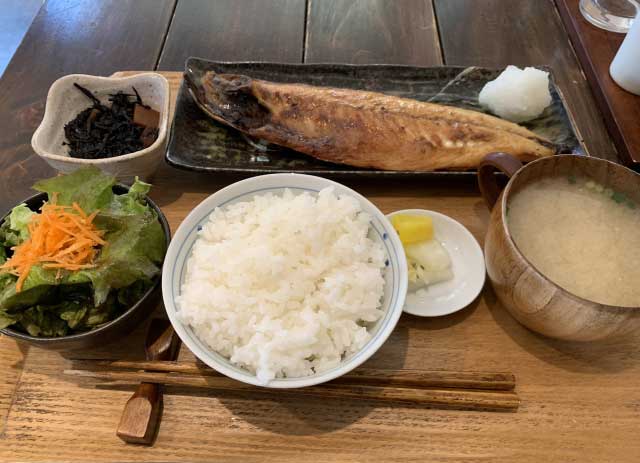
Teishoku
Teishoku 定食
Teishoku literally means "set food," and refers to a reasonably priced single-tray set of dishes served in a low- or mid-budget restaurant. Everything comes at once and comprises a predictable assortment of at least five dishes.
A teishoku is generally a lunch option, and is typically made up of a bowl of white rice, a bowl of miso soup, and at least three dishes of what are called okazu. Okazu is what keeps teishoku from being boring, as it can include anything from vegetables (sauteed, boiled, done tempura style, etc.) to fried fish or chicken, to pickles, to omelette, to salad to coleslaw - to name a random selection.
Teishoku menus avoid fancy, creative names; the name accurately describes what the dish contains. A teishoku is typically a healthy budget option, and shouldn't cost more than about 1,000 yen.
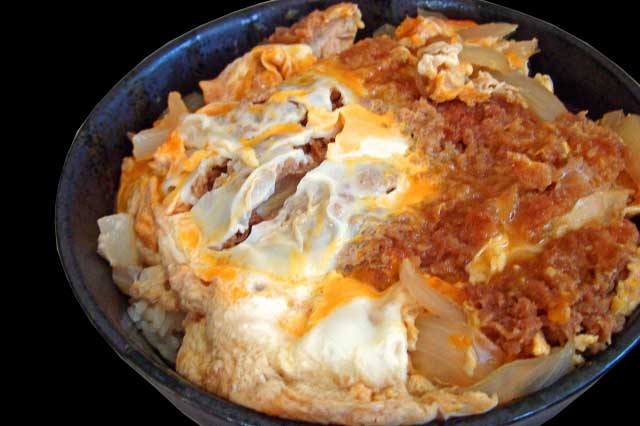
Katsudon
Donburimono 丼物
There are many different kinds of donburi (mono meaning "things") and friends like to call them don. Whether it's with tempura as ten-don, with chicken and egg as oyako-don (literally oya "parent" and ko "child") or katsu-don with a fried pork steak on top, the link is the deep bowl of rice underneath. All are great value because you can dine on just one dish.
Taking value to an extreme is gyu-don, a bowl of rice topped with stewed beef and onions. The Yoshinoya chain has sparked a price war recently, bringing prices down to unheard of lows and cash-strapped students and salarymen crowd in at lunchtimes.
If you're feeling hungry near a market or a fishing port, search out a restaurant serving seafood donburi such as uni-don (sea urchin roe donburi), ebi-don (shrimp donburi) or ikura-don (salmon roe donburi). These will be the places where the merchants and fishermen fill up. They wouldn't stand for anything less than the freshest and the best.
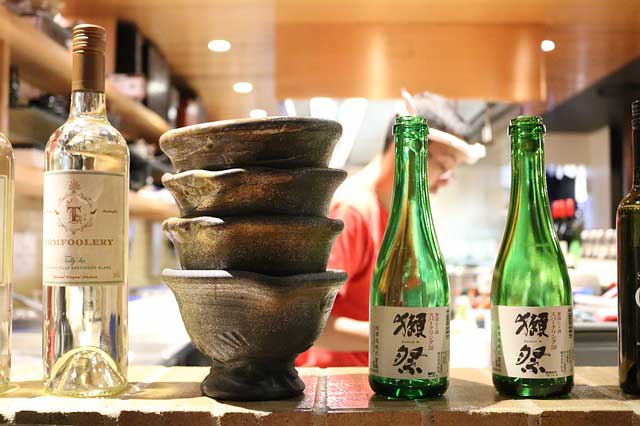
Izakaya 居酒屋
A jack-of-all-trades may be master of none but because izakaya serve a bit of everything, they are a good way to get acquainted with Japanese food and satisfy conflicting palates - as well as drink copious amounts of alcohol of course.
In many ways they fill the same gap that the pub does in England or the bar in the US. Family run establishments can be like a home away from home for the local neighbourhood. Brashly lit chain izakaya in business districts and near railway stations are where salaried workers pile into to leave the day's stresses behind. Higher-end izakaya are your gastro-pub where the food takes centre stage. What links them all is an eclectic menu of foods that go well with sake or beer.
Japanese favourites will always feature such as sashimi, tempura, noodles and all sorts of deep fried and grilled dishes. None however will be enough to fill you up. The idea is not so much a sit-down dinner as a sit-down drink with nibbles on the side. If you're very hungry, making a night of it at an izakaya can really add up. Best to stave off your hunger with beers and snacks and then stagger around looking for something filling and cheap later.
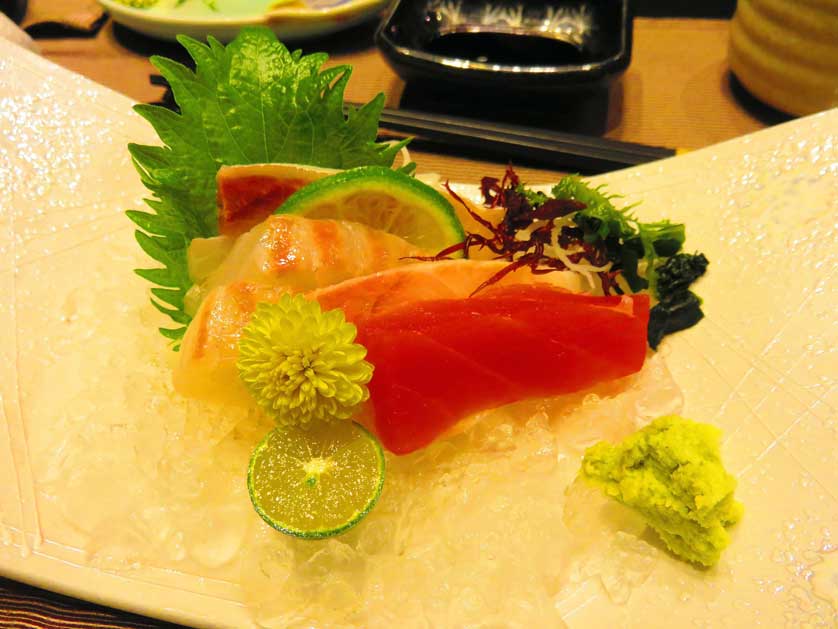
Kaiseki 懐石料理
Often in Japan, the way things are done are just as important as the results. Kaiseki sums up that ethic in a meal. You are there to admire the elegance of the pottery and the attentive heights of formal Japanese hospitality as much as the food itself.
Every dish served in what is often a ten-course meal is a celebration of the artistry and subtleties of nature. Not only every season but every month has a particular spirit to be expressed in the food. All senses are stimulated by kaiseki and if it's part of your stay in a ryokan, allow the combined experience to nourish both your body and soul.
Largely vegetarian, though sometimes with fish and occasionally with meat, kaiseki is Japanese cuisine of the utmost freshness and delicacy. Everything will be prepared and presented with a grace that can only be described as art, in order to give the guest a feeling of complete tranquility. Consequently, it can set you back a few yen. It is though, an essential experience. You will find nothing to approach it anywhere else in the world.
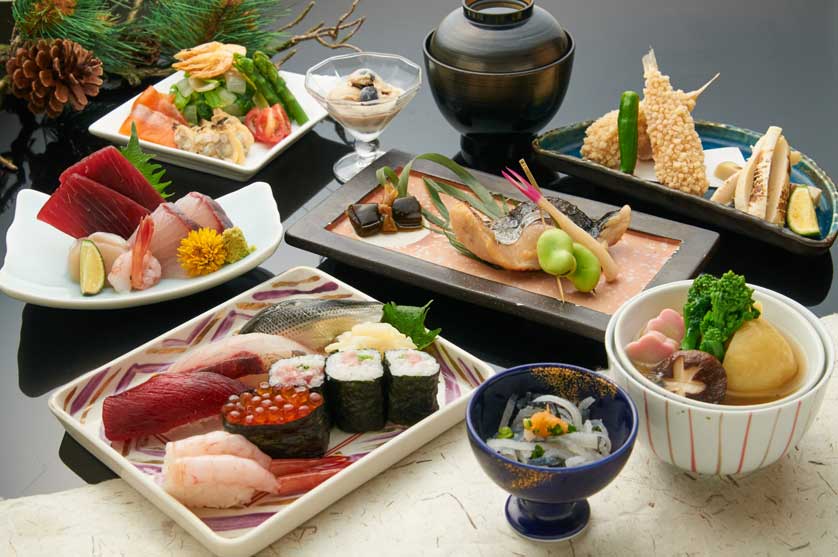
Japanese full course kaiseki dinner
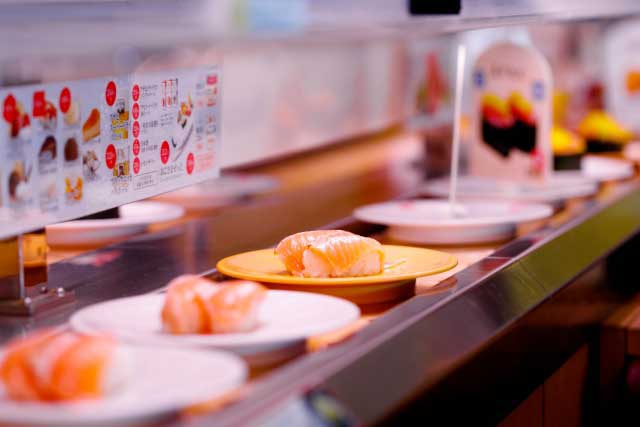
Kaiten Sushi 回転ずし
Fast becoming an institution all over the world, kaiten (lit. "revolving") sushi has brought the conveyor belt out of the factory and into our hearts. In reality, most items never make it round more than once, being thrown away when they lose their freshness. The busiest places always serve the freshest fish and watching the chefs working at the speed they do is a wonder to behold.
In general, kaiten sushi is the lower end of the market but consequently, it's often very cheap. Dishes are either all one price or colour coded with a guide on the wall. Stack up the plates as you eat or in larger places, drop them into a "letterbox" in the counter and the bill is calculated automatically. Great for finding your favourites and getting better quality elsewhere. It's worth remembering that even things you don't like at a kaiten sushi restaurant might blow you away at a classier establishment.
Kaitenzushi video
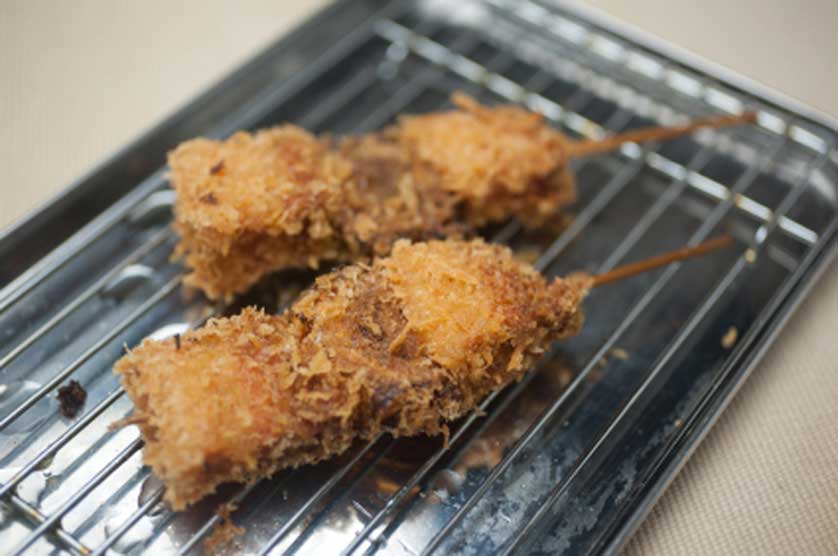
Japanese kushikatsu on skewers
Kushikatsu 串カツ
Uncharacteristically for Japanese food, there is little that's subtle about kushikatsu dining. The formula is unashamedly simple. If you can skewer it you can deep-fry it and if you can deep-fry it, it will taste better than if you had grilled it or baked it. You should be able to see what's on offer at the counter. Pork, chicken, fishcakes and various vegetables are the norm but if you're lucky you might find oysters, goose liver and matsutake mushrooms.
At some places you'll be able to order stick by stick, at others the chef will give you what he feels is best (remember to tell him to stop at some point). Either way it will be served bit by bit and hot to your table leaving plenty of gaps for beer to cleanse the palate.
Nabemono (Sukiyaki / Shabu-Shabu / Chanko) 鍋物(すき焼き、しゃぶしゃぶ、ちゃんこ鍋)
Nabemono is the class of one-pot stews, cooked and served at the table. It's often an interactive experience that everyone gets involved in with raw ingredients served alongside a bubbling pot of stock. Once all the ingredients have flavoured the stock, rice or noodles are dropped into the pot and anyone left hungry can fill up on that.
Meat, chicken, seafood, tofu, mushrooms, fishcakes and any ingredients that happen to be the local speciality are all served in nabe form but its most famous incarnation has to be sukiyaki. Outside Japan it's almost as well known as sushi but only here will you get the chance to try it with Kobe or even Matsuzaka prime beef. The thinly sliced meat cooks in seconds. Dip it in raw egg to give it a silky cloak on the way to your mouth.
All nabe are presented beautifully to emphasize a sense of the plentiful and bounteous. That's all except chanko, the nabe that makes sumo wrestlers as big as they are. The importance of the visual feast comes a distant second to who can get the best bits first. At chanko restaurants, often run by former wrestlers, there is always plenty to go around.
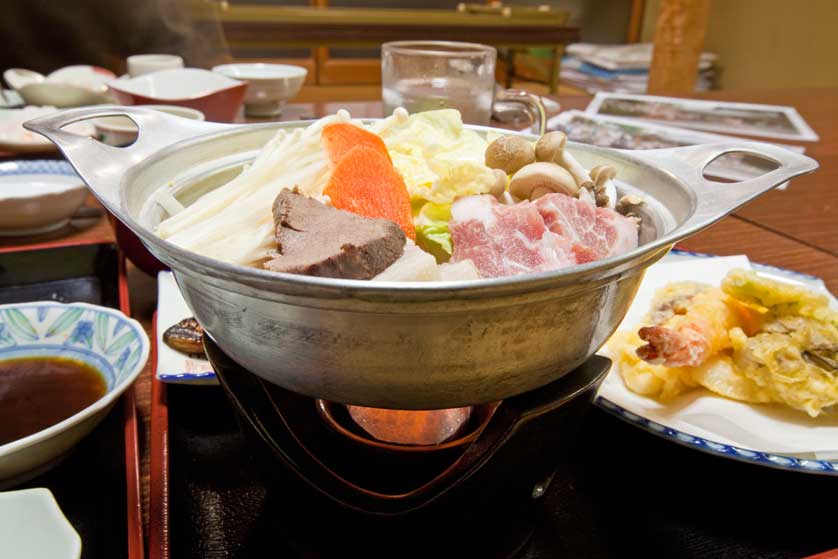
Japanese nabe with meat and vegetables
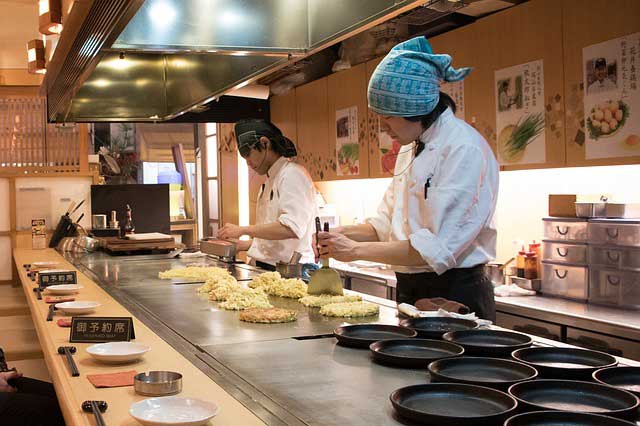
Okonomiyaki
Okonomiyaki お好み焼き
It's certainly not pizza and it's not quite an omelette but something akin to a thick pancake with trimmings. It usually comes part-cooked to a teppan (hotplate) at your table where you finish the job yourself. But don't ask for the manager if the ingredients come raw, just beat the egg, stir in the fillings and flatten the mixture on the teppan with the metal spatula provided, turning after five minutes. Aim for crisp and browned on the outside while still soft on the inside.
You can get okonomiyaki with gyu (beef), buta (pork), ebi (shrimp), ika (squid), tako (octopus) or yasai (vegetables) and even hotate (scallops) or kaki (oysters) though this is by no means a comprehensive list. Okonomiyaki literally means "cook what you like" and just about anything goes with these, dashi seasoned patties. Get a mikkusu (mixed okonomiyaki) for a bit of everything. A tasty, quick and inexpensive meal that's Osaka down to a tee.
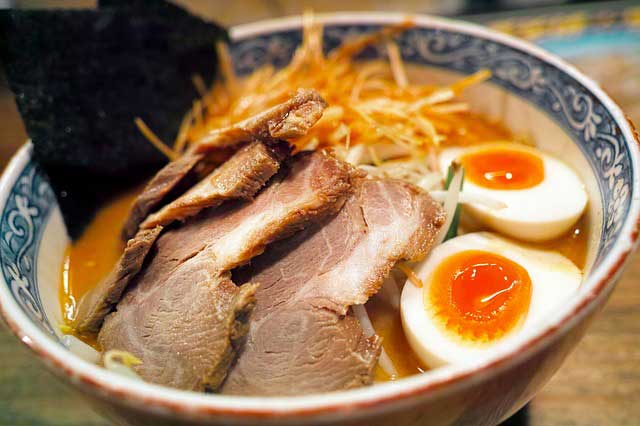
Ramen
Ramen ラーメン
It's not just noodle soup, it's an institution. Ramen is the cornerstone of Japanese fast food and millions of bowls are consumed every day. The ramen-ya is usually at street-level and easy to spot, often little more than a kitchen and a counter with heads bent low over large, steaming bowls. Many are outdoors in busy shopping areas and some dispense with seats and have standing space only. There's no ceremony to ramen so abandon convention and slurp to your hearts content.
Noisy slurping also serves a practical function. A sharp intake of air can cool down the noodles that are best eaten as fresh as possible. Some even say that, like with wine, the air on the tongue brings out the flavour of the soup. What is certain is that everyone has their favourite place for it and a local's recommendation is certainly worth getting.
You might get the choice between miso (bean paste), shoyu (soy) or shio (salt) flavoured soup though the stock base is always made from meat bones. Many places however serve only one kind that may well be the result of years of experimentation. Popular toppings follow its Chinese origins and include fatty slices of chashu (roast pork), crunchy fresh bean sprouts and menma (seasoned bamboo shoots).
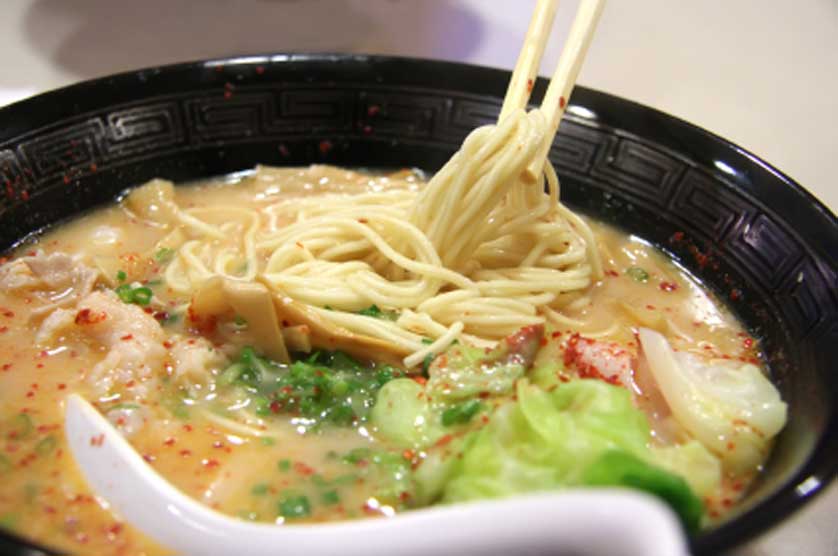
Japanese spicy ramen
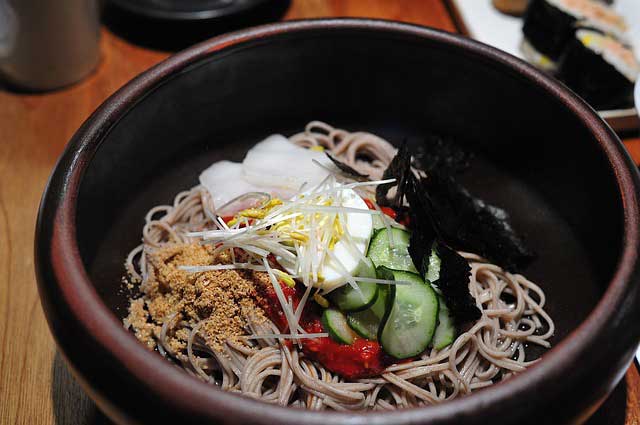
Soba buckwheat noodles
Soba & Udon そばとうどん
In contrast to the Chinese-style egg noodles used in ramen, these are traditionally Japanese. Udon, made from wheat, are thick, white and doughy in texture. Soba, made from buckwheat, are quite different. They are thinner, greyish in colour and require little chewing, explaining how the Japanese manage to eat them so quickly. Both are served in similar ways in the same restaurants though some specialise in one or the other. Places that knead their own noodles are highly regarded because a coarser texture makes for a more interesting mouthful.
One favourite summer meal is zarusoba. Here the noodles are served cold and piled on a bamboo rack. You'll get a cup of soy-flavoured broth with some grated radish, wasabi and sliced spring onions for you to mix into it. Dip the noodles in the cup and slurp them down. You can also get zaruudon but it's far more popular with soba.
Equally popular are soba and udon served kake, which is in hot, clear soup. A popular topping for which is tempura or simply the fried batter scraps from the tempura pan that add a little substance to the thin broth. Remember though, these noodles are notorious for providing only temporary relief from hunger so order the day's teishoku or setto (set menu) and get a rice dish on the side.
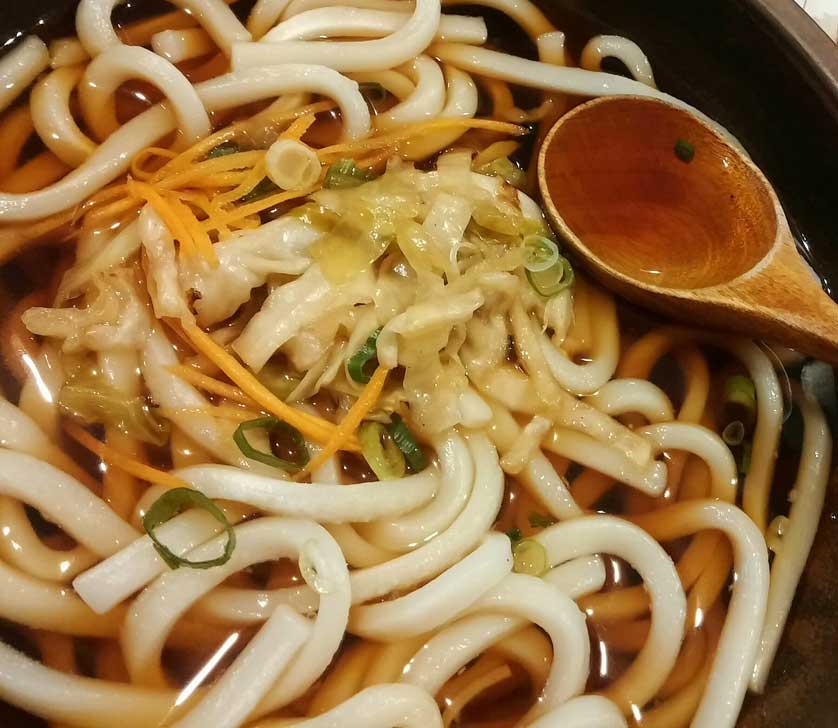
Udon Noodles in Broth
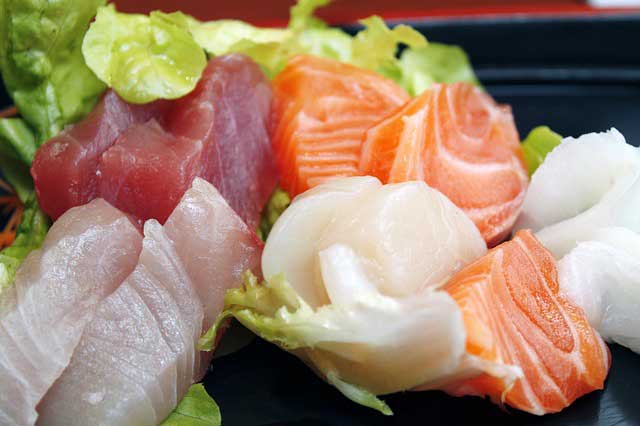
Sashimi
Sushi & Sashimi 寿司・刺身
So most of it is raw fish - don't let it put you off! Sushi and sashimi are real Japanese treasures and after a few times eating them you'll wonder why fish is ever cooked at all. Nowhere is the freshness of fish more important than in Japan and if you can find a place near a fish market or fishing port, so much the better. Some cooked fish is used (most often eel) and tamagoyaki (a light and slightly sweet omelette) is also served as sushi but after maguro (raw tuna), sake (raw salmon) and ebi (raw shrimp) there will be no turning back. Eat it as presented by putting the whole thing in your mouth and dealing with it. Attempt to nibble and you're certain to make a mess. The green stuff is wasabi, a kind of horseradish. Mix a little with your soy and dip - it's not something you'd want to spread on toast.
Nigiri sushi (sometimes called Edomae sushi) is raw fish balanced on bite-sized rice balls and sashimi is raw fish only. With the rice it can be surprisingly filling but it's hard to make a meal of sashimi alone. Fill up with any rice dishes that may be on offer or chawanmushi, a bowl of savoury egg custard steamed with all sorts of goodies inside.
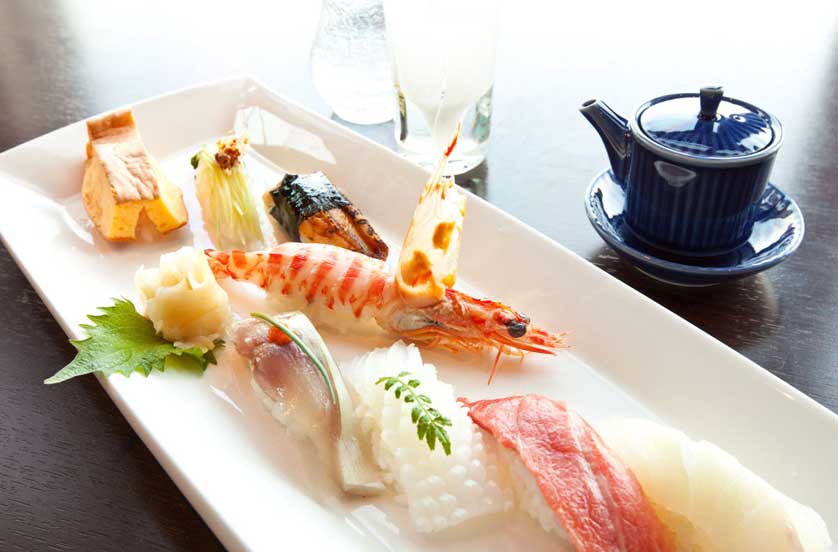
Mixed sashimi (raw fish) starter in a Japanese restaurant
Tempura 天ぷら
Typical of such successful cultural magpies, the Japanese took their inspiration for tempura from the Portuguese and made it into something that they love as their own. It is said that the ailing Shogun Ieyasu Tokugawa liked this new culinary acquisition so much that he gorged himself on it and died as a result. But that's not to say that tempura is unhealthy. Though it is deep-fried, if done correctly it is not at all greasy. The idea is to achieve a batter so light as to be barely there and use the freshest ingredients cut so they can be cooked quickly. Tempura is something to be eaten at the counter so you can watch the chef at work and eat your food when it's at its freshest.
The standard selection consists of prawn, mushroom, eggplant, carrot, a whole small fish, sea eel and a perilla leaf. Teishoku (set meals) usually come with rice and miso soup.
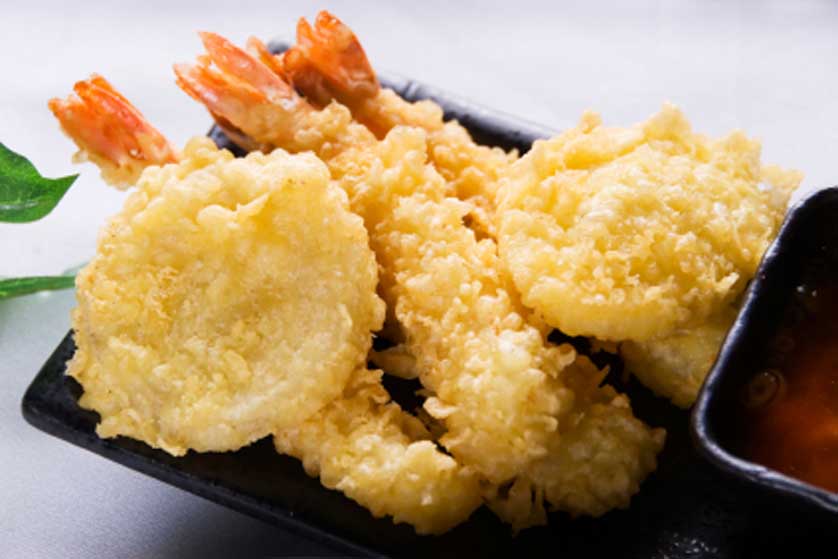
Prawn and vegetable tempura
Unagi ウナギ
With the hot summer months comes unagi season. Unagi means "eel", so this season is when eels all over the country are mercilessly sliced lengthways while merely unconscious and then grilled, steamed and seasoned into one of the best-loved dishes of Japanese cuisine. As is always the case with foods that the Japanese have taken to heart, the intricacies of preparation have been explored with a thoroughness that approaches obsession. Some chefs say that it takes a full 30 years just to master how to sharpen the eel-filleting knife.
Unagi is promoted as a high-energy food, eaten for its supposed stamina building properties. It is said to give you what you need to get through taxing summer days, a handy excuse to eat more of what you can get all year round anyway.
Unagi fills the mouth with a creamy, pasty texture and the sweetish sauce that's brushed on as it cooks adds to the richness. It can be quite overwhelming on its own so it's usually served on a bed of rice as unadon or unaju. The only difference between the two being the shape of the bowl (round or square) and the proportion of eel to rice, the more you pay the more well 'eeled' you are.
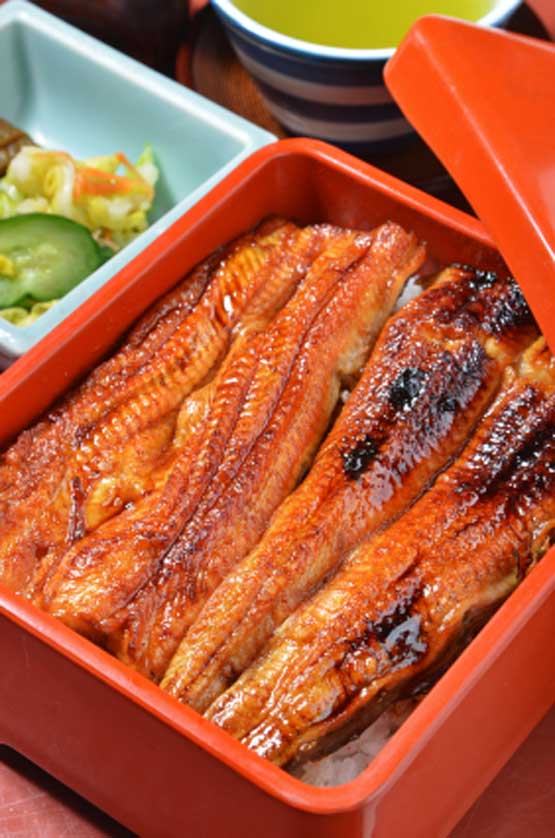
Unagi eel on a bed of rice
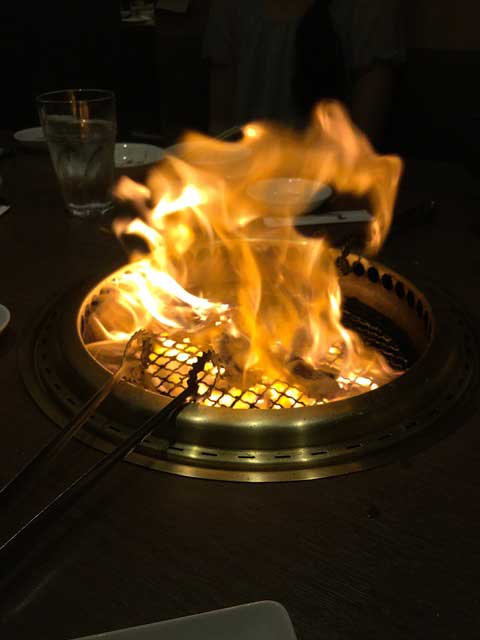
Yakiniku
Yakiniku & Korean Food 焼肉・韓国料理
There's more to beef than steaks it's true but after you have had a yakiniku barbecue you'll never look at a cow in the same way again. It might be hard to stomach some of the more far-out cuts such as the range of offal on offer but the efficiency with which these animals are being put to use has to be appreciated. Favourite cuts for the DIY barbecue are karubi (beef rib), tan (tongue), and rosu (slices of meat, often marinated) but char-grilled meat is only the tip of the iceberg. The more adventurous can try senmai (tripe), tan sashimi (raw tongue) or the absolute pick of the bunch, nama lebaa (raw calves' liver). It's served with sesame oil and chopped spring onions and, at its best, it's heavenly.
But Korean food has spread much further than just yakiniku restaurants. Kimchi (Korean spicy pickled cabbage) is now about as popular as any Japanese pickle. Reimen, the spicy cold noodle dish, can now be found in ramen joints. Many variations on bibinba (the popular post-yakiniku filler of rice and vegetables) have appeared including versions with cheese. Purists would say that yakiniku in Japan is a far cry from its Korean origins but the Japanese don't seem to mind. Typically, they've taken a foreign idea and made it entirely their own - via the West of course. Their hunger for Korean food extends to chijimi (Korean pancake) flavoured potato chips and karubi pizzas.
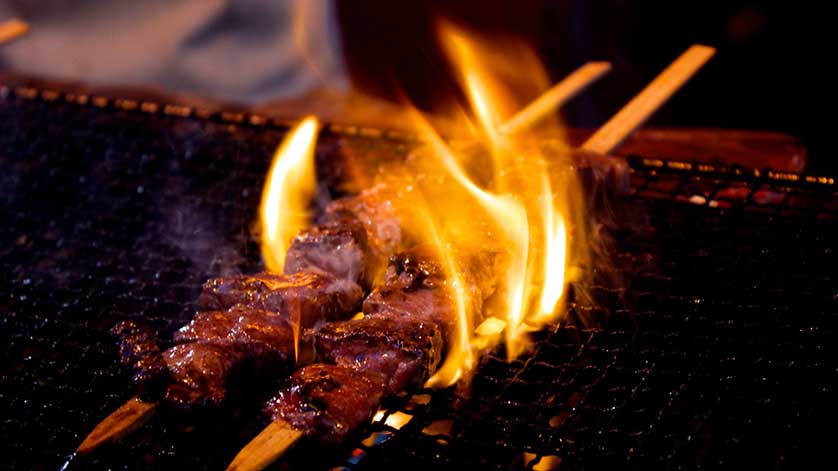
Yakitori
Yakitori 焼き鳥
Char-grilled chicken on skewers with a cold beer on the side. An appealing idea I'm sure you'll agree. Street stalls and down-to-the-earth establishments will have their own specialties, either preparing it tare (sweet-ish) or shio (salted). A yakitori establishment is often little more than a few counter seats in front of a busy chef. If ever your head turns to follow an enticing smoky smell, that's probably yakitori.
Lots of these places also serve other chicken dishes and delicacies on offer that might sound unappetizing at first. One example is nankotsu - chicken cartilage. It's often the knobbly bits on the ends of the legs but much better when it's the bit from the breast bone. Some places even serve chicken sashimi. Leave any fears of raw meat at the door and try it. Especially kimo (raw liver), it's a dreamy, melt-in-the-mouth experience.
But watch out - yakitori pricing can sometimes be confusing. It's quite common for the menu to give the price for only one skewer when they actually serve (and charge for) two.
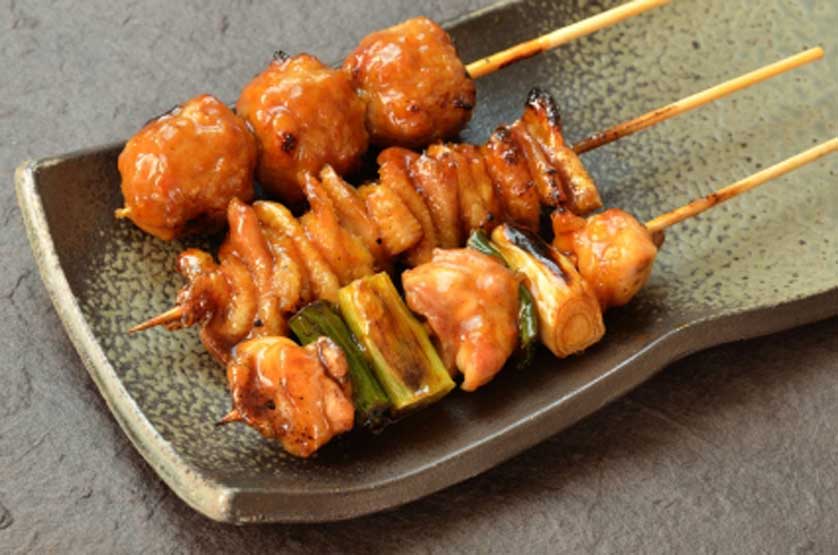
Japanese yakitori grilled chicken on a skewer
Japanese Curry カレー
Curry (pronounced kareh in Japanese) supposedly came to Japan with the British Navy at the beginning of the Meiji Period in the late 19th century. This caught on with the Japanese Navy which was modeled on that of Britain and spread from the port cities of Yokohama and Kobe to the rest of Japan.
Curry is served in Japan in a number of varieties: curry rice (カレーライス) , curry udon - curry served over noodles), katsu curry, curry with tonkatsu deep-fried pork cutlets (pictured below) and curry bread (a curry-filled type of pastry).
Japanese curry is mildly spicy compared with Indian curry which has become increasingly common in Japan with the boom in Indian and Nepali restaurants since the late 1990's.
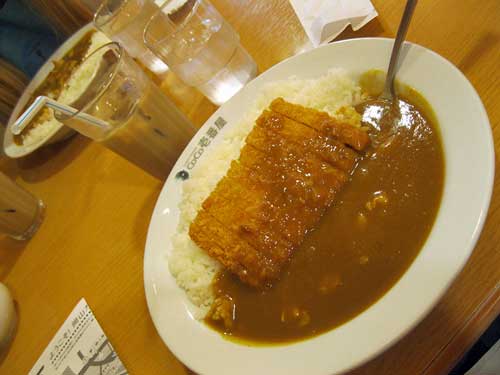
Katsu-curry is a common Japanese version of curry
Books on Japanese Food
Japanese food and cuisine: what to eat in Japan: see an explanation of the following dishes: donburi, izakaya, kaiseki, sushi, katsu, nabe, okonomiyaki, ramen, soba, udon, sashimi, tempura, yakitori.