Hinomaru Japanese Flag
Hinomaru (Nisshoki): read about hinomaru (the Japanese flag). The hinomaru or nisshoki is the well-known white flag with a red sun in the middle. The hinomaru remains controversial because of its war-time associations.
The Japanese Flag 日の丸
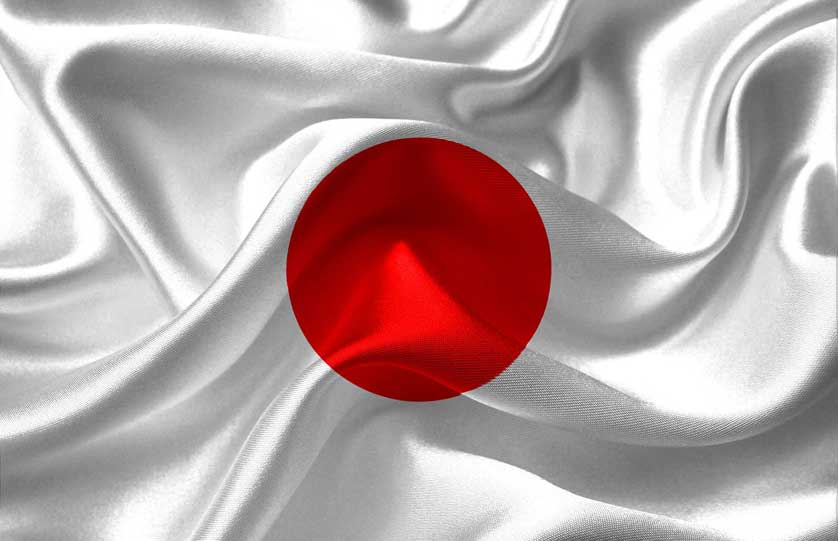 Hinomaru
Japan's national flag, the Nisshoki ("rising sun flag"), more commonly known as the Hinomaru ("the sun disk"), is the well-known and memorable red circle in the middle of an all white background. The red symbol is the rising sun.
The flag's origins are unknown (though the radical Buddhist priest Nichiren is sometimes credited) but the hinomaru flag dates to at least the Warring States Period of Japan's history, in the 15th and 16th centuries. It officially became the national flag only in 1999, partly due the the legacy of the War. However, it was designated the country's flag as early as 1870 by the centralizing Meiji government and became a symbol of the new Japan after the rule of the Tokugawa regime.
The flag remains controversial because of its strong associations with Japan's wartime past and the Imperial system. Unlike Germany, which in the 1930s was taken over and ruled by a particular party with its own symbols that were discarded as soon as the War was over, Japan's symbols prior to, during, and after the war were one and the same.
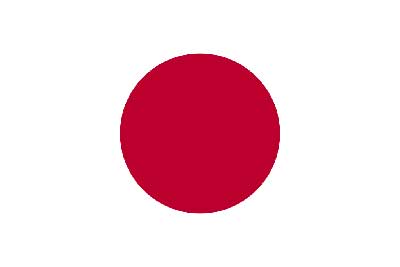 Hinomaru or Nisshoki Japanese flag
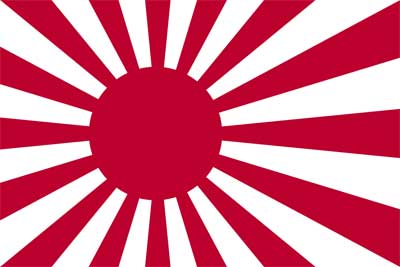 Japanese naval ensign - Jyurokujo-Kyokujitsu-ki (十六条旭日旗)
Following World War II, American occupation authorities restricted displaying the flag. These restrictions were lifted in 1947, and the flag continued on in its de facto status as the official flag of Japan.
As noted above, this changed in 1999 when the Japanese Diet made the hinomaru the official flag.
Controversy today is, aside from the occasional flare up in Beijing or Seoul, most likely to come from Japanese school teachers.
Japanese teachers and their powerful union have historically been left wing and pacifist, mainly because of profound regrets over the role they played in indoctrinating pupils in the pre-War period.
Some conservative school boards have made the singing of the national anthem, Kimi Ga Yo, also a symbol of Japan's militaristic past, and showing respect for the flag, mandatory. Some teachers have even gone to court and usually lost over this.
With the possible exception of Okinawa - which was the only part of Japan that was invaded by US forces during the War and today has the highest percentage of US military bases - most Japanese are fairly casual about the flag. The only time you will see the flag in great numbers is during a national team soccer match or when the Emperor comes out of his palace for a meet and greet with his subjects.
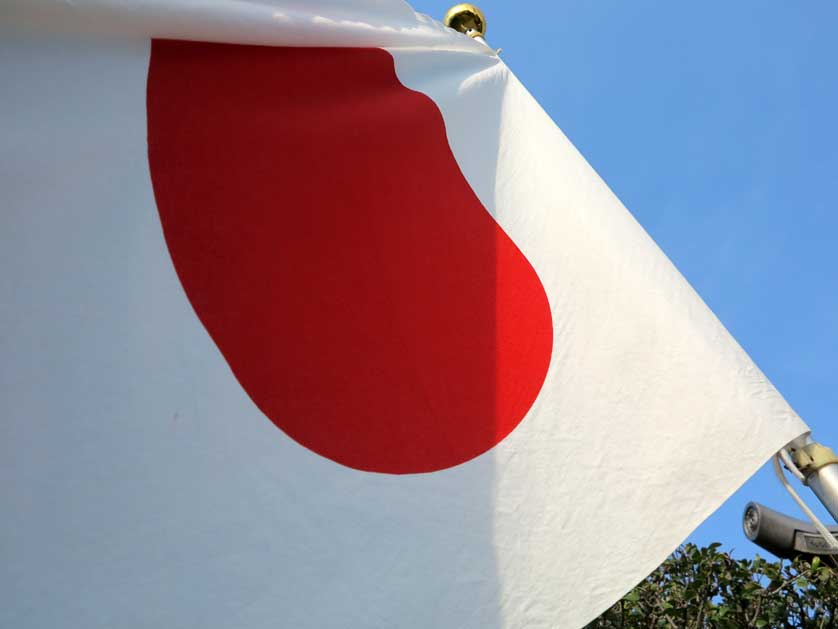 Japanese flag - hinomaru - flown on a National Holiday
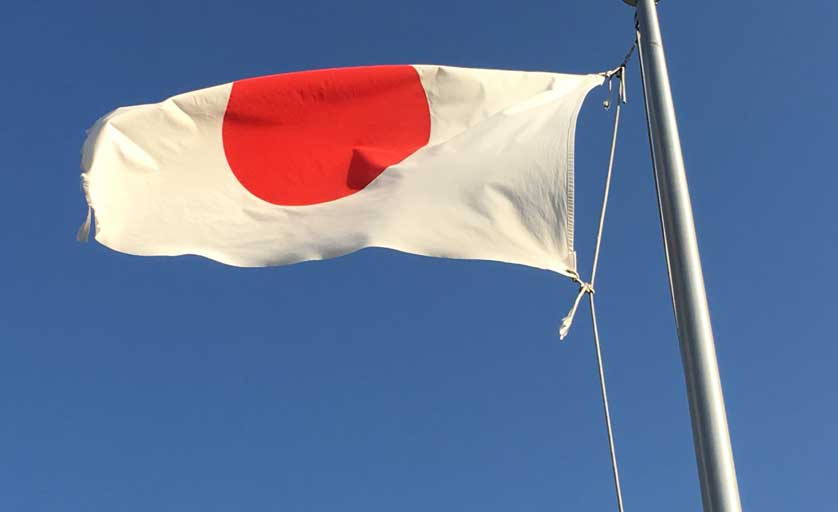 Hinomaru


