Japanese History: Index
Japanese History - An Overview By Era 日本の歴史
History of Japan - an overview by era The earliest human settlements in Japan are estimated to date from the Ice Age, about 30,000 years ago. At that time all four main Japanese islands were linked. The southernmost island of Kyushu was joined to the Korean peninsula and the northernmost island of Hokkaido to Siberia.
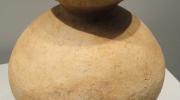
The first named civilization, the Jomon era, began in about 10,500BC and lasted till about 300BC. 'Jomon' refers to the distinctive rope-pattern decorations on the pottery of the era. The Jomon era itself is divided into 6 stages, the first of which originated on the Kanto plain, around present-day Tokyo. Jomon pottery predates ceramics found anywhere else in the world by 2000 years and — the people of the time being hunter-gatherers — is unique proof that making pottery was not just the preserve of peoples with agriculture. Similarities in the ceramics strongly suggest contact in late Jomon between western Japan and Korea. Contemporary Chinese accounts of Japan mentioned a fondness for alcohol, and face tattoos to indicate rank.
Nagoya Castle is famous for its huge, fan-shaped sloping stone walls
Japanese Castles
Japanese Castles: Japan has hundreds of castles scattered throughout the country. Many have been restored after damage in World War II, some as recently as only 20 years ago, others are the original, historic buildings.
Much of Japan's medieval history took place behind the heavily fortified stone walls and wide moats of Japan's castles, which governed and protected the surrounding countryside.
Many of Japan's castles were built in the fiftheenth and sixteenth centuries, when the country seemed constantly in a state of vicious warfare.
Japanese History - Kamikaze
On the Wings of Peace: An ex-kamikaze pilot creates a new world Yasukuni Shrine in Tokyo's Chiyoda ward: the country's preeminent cherry blossom site, war memorial shrine, and a sanctuary of Japanese nationalist sentiment since its founding in 1869.
I had just been through the Shrine's expansive war museum and had strayed into an annex and upstairs when I was hailed by an elderly gentleman in impeccable English, suit, tie and homburg. We got talking. The elderly crowd that filled the building, he told me, were mainly members of the wartime bereaved families association holding their annual reunion under the auspices of ex-members of the famous 'Special Attack Force' (tokubetsu kogeki tai, usually shortened to tokkotai), better known to the rest of the world as the 'kamikaze'. Kinase-san was there as an ex-kamikaze pilot trainer. We exchanged names and numbers. I contacted Kinase-san a day or so later and arranged a more relaxed meeting the next week at the Keio Plaza Hotel in Shinjuku.
Japanese History - Japanese Emigration
The History of Japanese Emigration: In 1853 American war ships - the 'Black Ships' - arrived unannounced in Edo Bay (present-day Tokyo Bay), under Admiral Matthew C. Perry demanding that Japan abandon its "closed country" policy. The policy of 'sakoku', so called in Japanese, restricted foreigners from entering the nation as well as limiting Japanese citizens from traveling abroad. Given the outmoded state of Japan's warfare technology compared with the iron steam-powered fleet of the Americans, the Japanese had no real option as the Americans left but to heed their departing promise to return the following year for a response.
And so on March 31 1854, Japan under the Shogun reluctantly signed the Commercial Treaty of Kanagawa and entered, for better or worse, the family of nations.
Japanese History - Lafcadio Hearn
Lafcadio Hearn aka Yakumo Koizumi (1850-1904), the peripatic Greek-Irish writer and journalist, is the most famous literary interpreter of the soon-to-disappear "old Japan" of the Meiji-era, well-known and respected by foreigners and Japanese alike.
Japanese History - The Battle of Fushimi Toba
The Battle of Fushimi Toba, just outside present-day Kyoto, was the decisive battle of the Boshin War, as the Imperial forces routed the armies of the Tokugawa shogunate
Japanese History - Ee janai ka
The Ee janai ka movement in 1867 saw riotous drunken street revels sweep much of central Japan as the population faced an uncertain future and decided to let it all hang out and party like there was no tomorrow.
Japanese History - The Sakai Incident
The Sakai Incident in 1868 involved the killing of 11 French sailors in Sakai, south of Osaka, by samurai from the Tosa domain. Later 11 of the accused samurai were forced to commit ritual suicide in atonement.
Tokyo History
The history of Tokyo from Edo era hamlet to 21st century metropolis.
Famous Japanese and Foreigners in Japan
Read biographical sketches of famous Japanese and foreigners in Japan, some still living, some gracing the history books.
The Great Kanto (Tokyo) Earthquake, 1923
Read about the Great Kanto (Tokyo) Earthquake which devasted Tokyo and the surrounding Kanto area in 1923.
Japanese Imperialism
Japanese imperialism and colonialism in the modern period changed its character from its early beginnings in 1894 to its final destruction in 1945.
Japan's Relations With The West
Japan's relations with the west have been a defining influence on the "culture and action" of Japan in the modern period. We look at the changes in Japan's relations with western nations from the beginning of the Meiji Period to the end of World War II.
Westernization in Japan 1868-1900
Japan's early westernization in the four and a half decades to 1900 since the arrival of Commodore Perry in Shimoda in 1853 occurred in all sections of its society and culture including home life, dress, the national cuisine and eating habits, transport, the law, the army, education, the press and sport.
Books on Japanese History
Read reviews on books on Japanese history from the early beginnings to the present day.
|