The Shibuya District 渋谷

Shibuya, Tokyo
© Ling Tang, Unsplash
Shibuya, the Young and trendy district
Shibuya is, without doubt, the most fascinating and most vibrant district of Tokyo. This well connected area is a popular shopping area of Tokyoites, an economic center, Shibuya is a genuine icon of the Japanese capital and an area you must visit.
Shibuya District, The Beating Heart of Tokyo
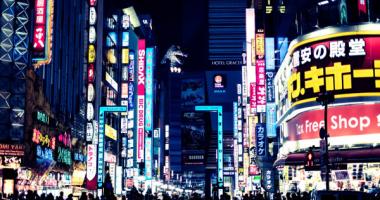
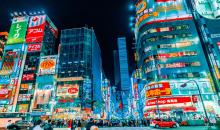
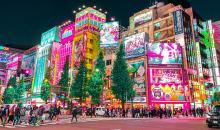
Shibuya is undoubtedly the Tokyo district, which best illustrates the charm of the city; this is a unique district in Tokyo. Shibuya is famous for its enormous and crowded pedestrian crossing, and it's hundreds of fashion stores, neon signs, and giant screens; its lively atmosphere with music being played everywhere.
By Shibuya, we mean here the neighborhood around JR Shibuya station. Indeed, the name "Shibuya" also designates the whole of the Shibuya-ku district is one of the largest in the capital. The district extends from south of Ebisu to the south of Shinjuku and includes the areas of Harajuku and Yoyogi.
To discover the area, we recommend that you lose yourself in the streets of Shibuya, as the neighborhood is rich in activities and discoveries. It all starts with the arrival at the immense Shibuya station, from here visitors can enjoy the view of the famous crossing, which stages a choreography punctuated by traffic lights. There, thousands of passers-by assemble, under the light of giant screens and in front of cars lined up.
But before this, you should see the mural in Shibuya Station by Okamato Taro (1911-1996), an icon of contemporary art. After thirty years on the wall of a hotel in Mexico, his gigantic work, named Myth of Tomorrow, was hung in the station to denounce the horror of the atomic bombings on Hiroshima and Nagasaki.
Shibuya station is extremely busy: with 3.1 million travelers a day, and it is the second busiest in Tokyo after Shinjuku station. Sometimes you have to be patient to find your way through the maze of corridors and exits.


The Hachiko Dog
When arranging to meet someone in Shibuya, there is only one place: in front of the statue of Hachiko dog. This faithful Akita came every evening to meet his master, a professor at the University of Tokyo, returning home from work. Sadly, one day, the man died at work; however, the faithful dog returned every day for years, waiting for his master's return until his death. The local residents were so moved by the story they decided to pay homage to this incredible and loyal friend. They erect a bronze statue in his honor. Every year, on March 7th, a party is organized there in his memory.

La statue d'Hachiko
Flickr Leng Cheng
The Shibuya Crossing
The crossroads is located just opposite the Hachiko exit of Shibuya station. The crowd is dense right out, and you have to learn to navigate to reach the intersection ...! Around the famous crossing, the traffic of vehicles is stopped for fifty-five seconds; at this instant, hundreds of pedestrians cross simultaneously in a joyful, organized chaos.
Around three giant television screens installed on the buildings display the bars of the moment, a group of fashionable J-Pop bands and other mascots. The best observation point of the crossing is from the windows of the large Starbucks located above the Tsutaya bookstore.
The Shibuya crossing has been used in many movies, to the point of becoming a stereotype of Japan. It is frequently compared to Times Square in New York.

© Jet Dela Cruz, Unsplash
Where to Shop in Shibuya?
The Shibuya 109, is a gigantic shopping mall, a true Mecca for Japanese women at the forefront of fashion, it has around a hundred high-end fashion boutiques over eight floors. Here, the Tokyoites explore different trends floor by floor in a deliciously luxurious setting. Also nearby is Mark City, another huge shopping mall, and the fine department store Tokyu.
But the afternoon of shopping does not stop there: the entire district is home to shops of all types: ready-to-wear, leather goods, shoes, eyewear, decoration, souvenir shops, you will find everything you need and more. Large chains (H&M, Uniqlo and Zara) rub shoulders with 100 yen shops and small boutiques such as thrift stores and designer stores. Department stores Tokyu Hands and Loft also have stores here, along with Don Quijote, an ideal place to pick up your Japanese souvenirs. Music lovers will be dizzy in front of the disc-filled floors of the Tower Records store, unmistakable with its yellow and red facade.
The other major street, Dogenzaka, sloping up to your left on coming out of the Hachiko Exit, is lined with bars and entertainment for the more mature, but no less hip, crowd. It is also home to Shibuya 109 and Mark City shopping malls.
About 300 meters north of Shibuya Station, up Meiji-dori Avenue, is where Cat Street starts, joining with Omotesando about 700 meters further north-east, running behind, and parallel to, Meiji-dori Avenue. Cat Street is full-on street hip, with slightly grittier fashion than the strictly high-street Omotesando, for the young and the switched on.
Spending an Evening in Shibuya?
This dynamic district offers a multitude of activities to suit all tastes. Immerse yourself in the captivating world of the Game Centers and let yourself be carried away by virtual reality adventures at the VR Park. At night, Shibuya comes alive with a vibrant nightlife that often doesn't end until the early hours of the morning. Explore the trendy bars, fashionable nightclubs and lively concert halls, all concentrated to the west of the station. Soak up the electrifying atmosphere at Womb, an iconic club renowned for its wild electro nights. For a more relaxed experience, treat yourself to a karaoke session at Karaoke Kan, where the famous scene from Lost In Translation was filmed.
But that's not all! Shibuya is also a paradise for gourmets in search of new gastronomic experiences. Enjoy fresh sushi on a rolling tray at Uobei, dip your chopsticks into a steaming bowl of ramen at Ichiran, or savor the tenderness of wagyu beef at Han no Daidokoro. With such a variety of flavors, your taste buds will be delighted with every bite. In addition, don't forget to explore the other facets of Shibuya, including its must-see sights, trendy bars and authentic restaurants, for a complete and memorable experience in one of Tokyo's most vibrant neighborhoods.
Although Shibuya is famous for its bustling crossroads and wide shopping alleys, there are also quieter corners and discreet backstreets to discover.

How to get to Shibuya?
Located in the heart of Tokyo, Shibuya is in the central part of the Japanese metropolis, so travelers have several transport options. Trains offer fluid access from several regions, with Shibuya station the epicenter of this human flow, served by the JR Yamanote and Saikyo and Shonan-Shinjuku lines.
JR Pass holders can get around at will, whether exploring Tokyo's urban sea or venturing out into the rest of Japan. For those who prefer the bus, numerous lines also serve Shibuya. Finally, cabs are widely available, although this means of transport is more expensive than the other options.